
New to the world of handheld PDAs? This page offers some advice on what to look for if you’re looking to buy a handheld computer
There are many sites
dedicated to helping people identify the best handheld device for their
needs. Rather than trying to clone information you’ll find on other PDA
sites, this page will give a brief overview of the options to consider,
and provide you with some useful links. As always, we welcome suggestions
for additions to this page.
If you’re looking to get online with a PDA, see our dedicated online
buyers guide
Chances are, you’ve reached this page as you’re looking for some general
information about finding the right PDA. With so many makes and models
on the market, we can’t hope to find exactly what you’re after, but we
can offer some general advice and guidance.
Firstly, you have to work
out if you’re simply after a diary, organiser, word-processor type of
device, something that’s a combined phone and organiser, or you’re looking
for something with advanced features for connection to the Internet or
an office network. If it’s the last one of these options, hop over to
our online PDA section first…
Traditional handheld
PDA
Assuming you’re not
looking at a cheap-and-cheerful £30 unbranded PDA from the local
market, you’ll probably be looking at either a Windows Mobile, or a Palm OS
device. See below:
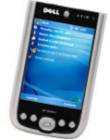 Windows Mobile – Including machines from HP, Toshiba, Dell and Fujitsu-Siemens, these colour devices offer excellent functionality, and because they’re powered by Microsoft software, they tend to synchronise well with PC software like Word, Excel and Outlook |
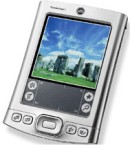 Palm OS – From Palm themselves, Sony or PalmOne (formerly Handspring). Colour and monochrome machines are available – generally a little cheaper than Pocket PC machines, with a good selection of features |
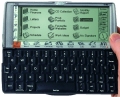
Psion |
Looking for a PDA? We recommend totalpda.co.uk
The Smartphone
More and more handheld
machines fall into this category – a PDA with a phone built-in, as well
as extras like digital cameras and FM radios. These are more for the power
user who wants to be able to connect to the ‘Net, but can be a neat way
of having everything together in one box.
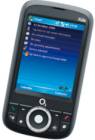 o2 XDA Orbit Features: GPS Sat Nav, Web & Email Connect: Wi-fi, USB, Bluetooth Free on contract From: O2 online |
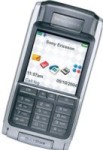 SonyEricsson P910i Features: Web & Email Free on contract From: MobileShop |
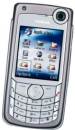 Nokia 6680 Features: Web & Email Free on contract From: Carphone Warehouse |
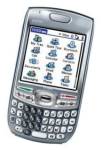 Palm Treo 680 Features: Web & Email Available without contract From: Palm Store |
Things to consider
| Keyboard or no keyboard? |
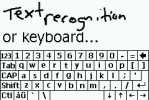 How Howare you going to use your PDA? If you’re planning to keep most of your information on your PC, and use a PDA to keep it handy, then you probably be fine with a device that doesn’t have a dedicated keyboard – instead, go for a tablet device with a big screen area – text input is done using a pop-up onscreen keyboard, or using character or handwriting recognition. |
| Email and Internet |
If you need to be connected in the field, it may be that a Smartphone is the thing for you. Have a look at our online buyers page for more on choosing a machine that can get you online. |
| Word processing? |
Lots It’s also worth noting that while the Pocket PC comes preloaded with
|
| Contacts and Calendar |
One of the more common reasons for people to buy an electronic organiser, is to keep their diary and address book with them. If you happen to use Microsoft Outlook at home or work for your day-to-day diary, take our advice and consider a Pocket PC – We’ve used Psion and Palm devices, and for keeping your information in sync between handheld and desktop machines, a Pocket PC is very hard to beat – in fact it’s such a close replica of your desktop Calendar, Contacts and Inbox, that you’ll feel right at home. |
| Connectivity | One of the joys of having a PDA or Smartphone is that it should be fairly easy to connect to your PC and transfer information. Just about all smartphones can be connected to a PC, but if you’re planning to be more adventurous, consider making sure that your device supports Wi-fi (for connection to your home or work Broadband), or Bluetooth (for connection to mobile phones and PCs). |
| Memory requirements |
Always On |
Windows Mobile (Pocket PC) operating system:
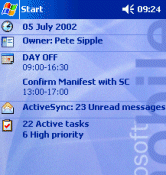
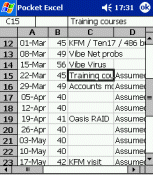
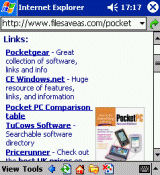
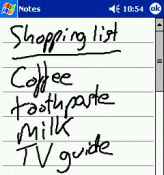
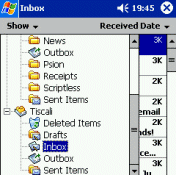
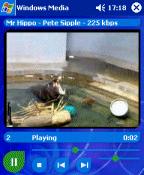
Below is a small selection
of screenshots from Windows Mobile handheld machines, demonstrating email,
spreadsheet, video playing, web browsing and document writing. For more
on Pocket PCs, see our Windows Mobile page.
 |
 |
 |
 |
 |
 |
Palm operating system
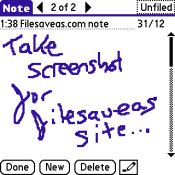
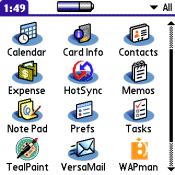
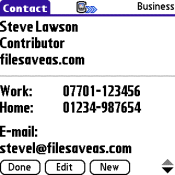
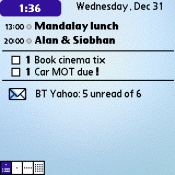
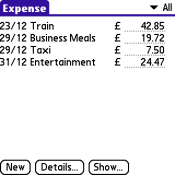
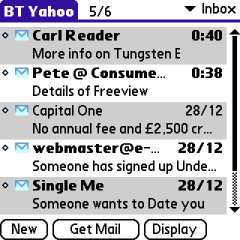
Below is a small selection
of screenshots from a Palm Tungsten E, demonstrating email, contacts,
diary, expenses and document writing. For more on Palms and Palm OS, see
our Palm page.
 |
 |
 |
 |
 |
 |
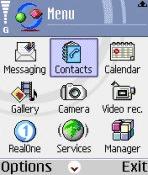
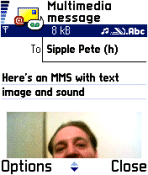
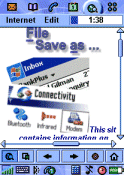
Symbian operating system
If a smartphone would most suit
your needs, see our Symbian page for examples
of the current range of smartphone devices. Below are a couple of screenshots
from various Symbian phones:
 |
 |
 |
 |
Links
- For more on PDAs, see our
PDA page - Looking for a PDA to get
on the net with? See our PDA connected guide
for advice - For more on smartphones,
see our smartphone page